Friday, September 5, 2008

See Jane...


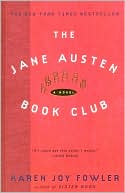
The Jane Austen Book Club, Karen Joy Fowler


This is one of those books I am liking more now that I'm done with it and can think about the characters' experiences with a little distance between us. I didn't fall in love with any of them, didn't really feel compelled by them as I was reading. On one occasion, I found myself checking to see how many more pages I had to get through and was happy to find a huge chunk of pages at the end that were additional materials and not stuff I *had* to read.

But now that I've finished reading it, I am finding that it did plant little seeds of "oh, I did like that" all over my brain and I have to say it is a good read.

The best thing about the book, though, and the thing I appreciated and liked from the get-go, is the way Fowler pays homage to Austen through the structure of her own novel. Each chapter takes a particular Austen book, and uses the theme of that book as the backdrop for the tale of the character hosting the reading group that month. Obviously, if you've read Austen at all, that makes the story lines created by Fowler fairly predictable in nature, but it's still an interesting read.

I have to admit I've yet to get on board with the whole Jane Austen revival that's gone on as of late; there are about eleventy billion books being published today that go back to contemplate Austen's stories from the point of view of another character, or creating new stories branching off where Austen left off. I hesitate to pick any of those up because I have a hard time believing they can even come close to duplicating Austen's style or perfection. They all look like they'd be hokey romantic drivel to me and Austen's novels go so far beyond that, I think it might be insulting to try to pick up where she left off. But I don't think Fowler's book does that at all. She brings some of Austen's themes (and truly she does focus on the romance of Austen's stories in her own recreations, but in a unsentimental way, I think) into a modern circle of people and simply shows the timelessness of Austen's thematic content.

Not going to go down as my favorite book ever, but I enjoyed it nonetheless.

Saturday, August 30, 2008

Straight Up and Fabulous...


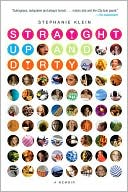
Straight Up & Dirty, Stephanie Klein

Girl crush, right here, my friends. I want to buy this woman a drink and maybe kiss her goodnight.

Klein's candid and almost uncomfortably honest account of getting through and over her divorce is one of the best reads I've had in a long time. When dating a bevy of men ("a pair and a spare") proves unsuccessful, Klein undergoes an at times painful journey of self-discovery that hit close to home in a way I've never encountered through the written word.

I'm finding that memoir is becoming far more riveting to me than fiction--had this book been fashioned about a character, invented inside the mind of a writer, it would have been good, probably great. But the fact that, as I'm reading it, I am constantly aware of the fact that this is a real, flesh and blood woman, sharing her real flesh and blood experience, it makes the act of reading the words a form of communication one just doesn't get with a novel. She could have easily created a character and written a "semi-autobiographical" account of a woman struggling to find herself, "loosely" based on her own life. But the rawness of memoir, especially this one, makes the story that much more alive. This is not a character, but a real woman, one who you might walk by on the side walk, or sit next to at a bar. And she lived this.

Not that it's an extraordinary or unusual experience she's gone through. When I was the age she is in this memoir, I went through a similar sort of experience, although it wasn't as messy as divorce. I went through a similar journey to find a sense of satisfaction, contentment and peace in my life. I knew other women had to have gone through it, too; I knew I was not unique in my grief and in the transformation I went through. But I've never read it before. Never seen it put out there so eloquently and beautifully.

Reading Straight Up & Dirty took me back to that time in my own life, to both the pain of loss and the elation of self-discovery and self-reliance. Tonight as I absorb the last bits of the book into my consciousness, I am so grateful to have picked up the book and to have not only read Stephanie's story, but to have reminded myself of my own journey to the woman I am today.

Tuesday, August 26, 2008

Back on track...


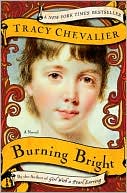
Burning Bright, Tracy Chevalier

Oh. So. Good.

I loved The Girl with the Pearl Earring, so I assumed this book would also capture my attention. Add to that my abject adoration of all stories based in 18-th century London (the more down-trodden or plague-y the better, my friends), and my love of poetry and there was really no other reasonable expectation to have other than that I would fall madly in love with the characters, the setting, the story, the whole nine yards.

And I did. But only after having completed it and having contemplated it for a bit did I really get it. The story is that of the Jem Kellaway, a country boy from Dorset whose family moves to London after a family tragedy. He and his younger sister, Maisie, befriend rough and tumble Maggie Butterfield, the typical, hardened street urchin-y smart mouth who is savvy in the ways of London's seedy underbelly. Together Jem and Maggie befriend the poet William Blake, who lives next door to the Kellaway's, and who seems to see Jem and Maggie as more than simply two kids running through the streets of London looking for mischief.

The tension between opposites, and more importantly, what lies between the poles, is the main motif here. Jem, the country boy to Maggie's city girl. One seemingly representing innocence, the other experience. But as the story unwinds we realize that isn't always the case and that people are, at once, a mixture of these two ideas, depending upon the circumstances in which they find themselves. The loss of innocence, and the multitude of forms that loss can take, plays out over and over again in the pages of the story, each time painfully reminding the reader that pure innocence is fleeting and impossible to replace.

However, this loss of innocence doesn't bring with it only dispair--there are glimmers of hope and happiness sprinkled amidst warehouse fires, mob scene riots and exhausting treks across the country-side.

Initially I was disappointed with the ending of the story--it seemed, well, anticlimactic to me. There was no screamingly big finish--no great tragedy or overwhelming joy. There is the sense, simply, that life will go on for these people. My first impulse was to feel let down. But after a time I realized that this is precisely the intention of the novel--life is not lived in the extreme, in the realm of opposites--it's lived within the space in between those poles, balancing between innocence and experience.

I'm going to miss these characters, but given the conclusion Chevalier created for them, I will probably spend some idle time imaging with the future could possibly have held for them. And I've always thought that's the mark of a good piece of literature.

Monday, August 11, 2008

What? I read.

I just don't seem to be able to remember to write about what I read. But seriously, I do read. Not as voraciously as I'd like to, but I sneak it in there. Soooo, what have I read lately?


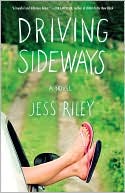
Driving Sideways, Jess Riley

I really enjoyed this; I read it while undertaking a huge cross-country move of my own and appreciated the "gigantic new adventure"ness of it all.

After years of basically waiting to die, main character Leigh is faced with the fact that she just might end up living after all. She receives a new kidney and is given the "okay" to embark upon the coming-of-age adventure that so many of us take for granted, and at an earlier age, even--driving cross country.

She has some pretty serious expectations built up about what this trip will entail--everything from learning more about from where her donated kidney comes, to confronting the mother who left her and her overbearing, begrudgingly over-protective brother years earlier.

It's safe to say that NOTHING is as Leigh expects it to be as she journeys towards a clearer sense of herself and the grown-up she's been given the opportunity to become.

Yummy Mummy, Polly Williams

Well, I love me some British chick lit, so I was a sucker for this. I'm sure it had nothing to do with the premise being that of a once svelte and fashionable career woman having morphed into a frumpy, insecure milk-bar of a mother with zero self-esteem and a brooding sense of doom in her relationship. Who could relate to that (well, minus the doomy relationship part)?

I loved this book--it was not, overall, a *deep read* by any means. But I loved watching Amy peel back the layers of her experience as a mother to find the core of her being again. Since having my own child over two years ago, the identity shift a woman experiences when becoming a mother is of particular interest to me. And I found her moment of clarity--a walk in a London park that just happens to be my "happy place" (ah, Regents Park, how I pine for you and my view of the pond from my dorm room)--to be tear-worthy and motherhood/womanhood-affirming. And sometimes, even if it's just a little treacly (which I didn't think it was, but I've read that others did), we need that.


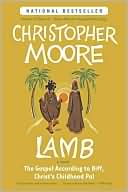
Lamb: The Gospel According to Biff, Christ's Childhood Friend
Christopher Moore

Seriously? So funny. Not being Christian, I'm not sure just how high it would rate on the "irreverent scale". Well, actually, since Jesus was a Jew and most of the knocks are at Judaism, and since I'm a Jew, I guess I didn't find it very irreverent--just freaking hysterical.

Premise? Biff, brought back to life in modern times, is tasked with telling the story of Jesus (um, Joshua) that no one knows. See, Biff was with him during those lost years, the ones when, according to Biff, he and Joshua traveled the East in search of the Magi who visited the manger the night Joshua was born.

This journey forms the basis of Joshua's later teachings and Moore is able to weave Eastern thought and religion into Jesus' message in a way that is effortless and, as absurd as the story can be, makes perfect sense.

Biff is hysterical--apparently he invented sarcasm and is very particular about who uses it and is really pissed off when they mangle it. One doesn't normally picture Jesus roaming the world with an over-sexed (seriously, he's got a thing for Mary. The Virgin Mary) ready-to-fly-off-the-handle sidekick. But in almost every way, it was absolutely perfect.

I was a little disappointed with the ending, but you know, it is what it is. Not like Biff could change all of that dying on the cross thing (although he did try). Interestingly, this book humanized the story of Jesus for me in a way that eleven years of Catholic school couldn't do. I think a bunch of nuns would probably clutch their rosaries in horror at that, but again, I kinda like that.

Saturday, May 24, 2008

Such a Pretty Fat, Jen Lancaster


I've never been a big memoir person. I generally don't "do" non-fiction. I plowed through them in lit classes in college because I had a deadline and I have a smattering of memoirs/autobiographies on my bookshelf that I've never read (no doubt the vast majority of them will be purged with this next move in the coming month). So I wasn't sure how I'd feel about reading Jen Lancaster when I started out with her trifecta of wickedly funny memoirs.

Now that I've closed the back page of the last of the three, I am sad. She has chronicled the rise and fall of her fancy shmancy career before becoming a writer, her life in the city and lastly, her battle to gain control of her weight. Each book is hysterically funny on its own, but having read them one right after the other (if life hadn't gotten in the way, I'd probably have inhaled all three in a matter of days---damn all that husband, child, household and friendship junk!)

Since I've never immersed myself in a memoir before, I'm not really accustomed to the feeling of "gee, I'll miss her," in the way I am feeling it right now. Sure, when I finish a piece of fiction, I am left feeling a bit of loss; the characters are gone and most likely never to be seen again, adrift in the space of my memory, probably destined to fade into vagueness (unless we're talking Atticus Finch or Tess of the D'Urbervilles). But this time, I finished the book and was very aware of the fact that the heroine of this particular *trilogy* is still out there, on a daily basis living a life that is fodder for more hysterical writing.

I was also fascinated, this being a memoir, that I could actually find myself saying, "God, I relate so much to this woman." Whether it was her abject love of all things high in calories and saturated fat or the fact that she can handle all aspects of laundry EXCEPT the folding and putting away part (I am SO like that), I found myself saying, "me, TOO!!" in giggly excitement at so many parts of her book, as though I was chatting with a new girlfriend, in that fun "honeymoon" stage of friendship when you're getting to know all of each other's stuff. (I hate the word "stuff", but my brain is fried right now, so please except my apology for using the biggest cop-out word in all of the English language).

I was hugely inspired by her decision to gain control of her body and find her way towards a healthy weight and lifestyle. As I chronicle (poorly) in my other blog, No More Fat Sarah, I have had a life-long conflict with my body and it's insatiable love of yumminess. Her progression from "okay, really, tomorrow I'm going to start the diet....really," to the last page of the book gave me a sense of not being alone. I have no "fat" friends. I am surrounded by lithe, skinny girls who wave their hands dismissively at me when I lament about my weight. Reading this book was like having a friend to kvetch with about it, even though Jen didn't have to actually listen to my end of the kvetch-fest.

I'm impatient for the next book, although I know right now she's still out promoting this one--it only came out a few weeks ago. So until her next book hits the shelves (she'd better be writing one as I type this...), I will have to be content with her blog, www.jennsylvania.com.

As for my next book, I am delving back into the world of fiction with Hanna's Daughters, by Marianne Fredrikkson.

Saturday, May 17, 2008

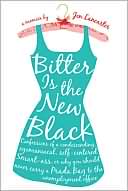
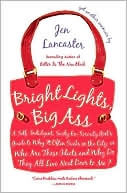
Bitter is the New Black & Bright Lights, Big Ass, Jen Lancaster


I am not worthy.

Wickedly funny--I routinely annoyed Husband by laughing out loud while he tried to sleep next to me. He was not amused, but it was worth it. Lancaster is, at times, beyond obnoxious, but more often than not says what you'd think, but wouldn't have the balls to say.

I love her. Currently reading her new memoir: Such a Pretty Fat. Will probably comment on it extensively in my fat-girl blog, No More Fat Sarah.

Thursday, April 17, 2008

Posh, Lucy Jackson & Snow Angels, Stewart O'Nan


And the gloom goes on!

I loved both of these books, but DAY-UM! Worlds o' hurt in each one of them.

Posh is the story of several characters whose lives revolve around the elite Griffin School, a private New York high school, filled to the gills with the teenagers of the rich and famous, rife with all the problems that lie under their glossy veneers. Initially I thought it was going to be a sardonic satire that was going to make me laugh grimly at the foibles of the self-important and arrogant. In a way, it did. Please, having taught at a school similar to Griffin myself, I could see parents I have dealt with in the sketches of minor characters, parents who come to complain to Kathryn "Lazy" Hoffman about their daughters giving blow jobs to boys during a house party, off campus, on a Saturday night, expecting the headmaster to be able to actually do something about it. Because god forbid they actually parent their own children, right?

Reminded me of the mother at the school I taught at who actually barred my way from mailing a deadline to the yearbook company until she had a chance to review the quality and quantity of prom pictures that highlighted her daughter.

Or the father who wanted to know why his son received a B+ instead of an A- on a paper and was actually waiting for me, in my class room, when I arrived, expecting me to go line by line through the paper with him---while my class waited.

Or the parents of my student who, for a home work assignment, simply downloaded and printed out Spark Notes, complete with graphics and advertisements, and handed it in as his own work. They took me all the way to the Dean of Students complaining that the zero I gave their son was unfair because when I told the class they had to summarize the three chapters they read for homework, I didn't specify that their summaries had to be in their own words. And the piece de resistance? The Dean agreed with them (they gave buttloads of money to the school), and I had to give the kid an actual grade for his "work".

But Posh is more than just a satirical look at these self-absorbed lunatics. It begins with a loss almost too painful to bear and ends with yet another loss that is a sucker-punch to the gut, even though you could see it coming a mile away. We tend to write off the rich and fabulous as simply that and Jackson's book shows that, if you scratch just a bit below the surface, they are much more. Rife with vulnerabilities, they are far more complex than you'd think by looking at them in all their Neiman Marcus'd glory.

O'Nan's Snow Angels takes you to a completely different world, to lower working-class, small town dysfunction. Told, for the most part, from the perspective of Arthur Parkinson, a teenager stuck in the midst of his parents' divorce, it's the story of relationships unraveling and how those involved cope. Or can't cope. And the extremes they go to when they can't make their lives work outside the realm of those failed relationships.

I clearly loved the misery (this seems to be what I love about literature), but I had a hard time loving the characters. Perhaps that's O'Nan's purpose, since they are all, in some way, very responsible for their own bitter unhappiness in life. But I was only able to wrap my heart around Arthur, mainly out of pure pity for his plight and the stoic way in which he attempts to deal with it all.

He was perfectly drawn as the mortified teenager who so does NOT want to hear his mother prattle on about all of his father's faults and cannot bear to hear his father talk about his new girlfriend, but can't bring himself to tell either of them to shut the fuck up about it. His stoicism and the "too-much-information" he endures at the hands of the very adults who are supposed to protect him highlight how selfish grown ups can be when faced with their own little personal tragedies.

In a 6 degrees of separation twist, he is also entangled in the dysfunction and tragedy that befalls his former childhood babysitter who is dealing with a violent and estranged husband. As if dealing with his parents' maelstrom isn't enough, his connection to Annie is beyond heartbreaking.

While the lives of adults around him shatter, he attempts to forge ahead in his first romantic relationship, the one shining hope in this story that love can conquer, if not all, at least some.

So, now I've taken a bit of a breather from the tragic misery and I'm reading hysterically funny misery, in Jen Lancaster, Bitter is the New Black. Only half way through it, but it is one of the funniest books I have ever, ever read.