Tuesday, January 27, 2009

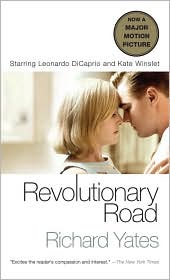
Revolutionary Road, Richard Yates


Oh. My. God. I knew from the movie previews to expect suburban malaise. However. This book is suburbian malaise and existential angst hooked up to a car battery and high on crack.

Frank and Alice Wheeler are a couple of married suburbanites, stuck in the stereotypical, Leave-It-To-Beaver 1950's; or rather, right on the outside of it, as their home is adjacent to, but not actually IN the new Revolutionary Estates development with it it's homes and cars looking "like candy and ice cream". Each fancies themselves to be more interesting and passionate than the rest of those suburbanite couples, tucked in their perfect little homes with their perfect little lives. They scoff at those content with the mediocrity of life in the suburbs and compliment themselves on being oh, so much more interesting.

It was interesting to me that the first major action of the book is that of a play being put on by a small local theater group. As the play goes, in terms of it's success, so, in a way, does the story of Frank and Alice go. They are, in fact, living a lie, a sort of play within a play that they seem desperate to break out of. There are moments of shining hope and so-close-you-can-taste-it triumphs over their lives. And there are also crashing failures and upsets, until they reach, as individuals, and a couple, their ultimate breaking points.

As we learn about each character's childhood (the author seems fascinated with the idea of psycho-analysis; there is even mention of Freud's theory of penis-envy), we begin to understand what motivates them and why they are driven to be the superbly flawed and, at times, all but unlikeable characters that they are.

The beauty of this book is the characters around Frank and Alice. The meddling, nervous real estate broker and her half-deaf (and grateful for it) husband, Helen and Howard Givings--who Frank and Alice will be if they don't bust out of this rut and strive for the greatness they feel they are capable of. Their neighbors, the Campbells, who have settled into their malaise rather than struggling against it. And perhaps most interesting, the institutionalized son of the Givingses', John, who is the only character who seems to "get" Frank and Alice.

The book starts with a quote from John Keats that is as follows: "Alas! When passion is both meek and mild." Alice and Frank are each both of these things, in turns. They're strengths and weaknesses yo-yo throughout the story, but never find a middle ground, never find one another.

I expected pages of bitter disagreement and domestic strife in the book; I've seen the advertisements for the movie in recent weeks. What I didn't expect was to see the absolute and utter dissolution of the American Dream unfold before my eyes over the past two days. I could not sleep after turning the last page. While I cannot relate in any really authentic way to either Frank or Alice, in experience or sentiment, I could not help but be shaken all the way down to a very deep place in myself when I realized that there are people out there who can, and do, relate. Much in the same way as I did after seeing the film "American Beauty" years ago, I walked around today, watching couples and looking at houses in my neighborhood and wondering, "Who are they really, and what is the true substance of their lives and their relationship?"

Next, I'll be reading something a bit more light-hearted. My brain and heart need a break after this one.

Sunday, January 25, 2009

Snow Flower and the Secret Fan, Lisa See


So fine; I gave up on War and Peace for the time being. There are too many books out there begging to be read for me to give up precious time slaving over a horrible translation of what I'm sure is a spectacular book, but which at this point, has no chance in hell of being remotely appreciated by me. So I will go back to it. Sometime. Maybe.

Instead, I spent part of my Barnes and Noble gift card (which I sadly burned through like it was a stick of butter set on top of a blazing oven) on Lisa See's Snow Flower and the Secret Fan. What a beautiful book. It is the story of Lily, who at the age of 80, an age few women in 19th-century China would have lived to see, looks back on her life and tells us of her greatest love and of her greatest sin.

The book's focus, a friendship between two women, was riveting and heart-rending. Paired as "laotongs", or, "Old Sames" (essentially soul mates) as children, Lily and Snow Flower forge a bond from their foot-binding days of girlhood until their last breaths. The contract of the laotongs transcends all other contracts and is unbreakable. Set against the backdrop of strict social customs, changing fortunes, arranged marriages, and the trials and triumphs of motherhood in a time and place where only boy babies counted, Lily and Snow Flower are each other's sources of strength and comfort. When separated, they communicate through "nu shu", or "women's writing", carefully inscribed on a silk fan.

The intricacies of social custom, and the stoicism with which women were expected to bear the inevitable circumstances of their lives made the book all the more heart-breaking. The process of foot-binding andmatch-making, and rituals of singing laments and well-wishes to the bride before she leaves her "natal" home for that of her husband's--all of these elements of the life of a Hunan woman at this time were described in such lyrical detail that the modern reader is both horrified and awed.

It isn't all beauty and loving commitment between Lily and Snow Flower, however. Their contract is threatened through the misunderstanding of a message written onto the secret fan. The irony that in a story based around the written communication between these two women, that it should be their "nu shu" messages that lead their friendship into peril was fascinating.

I've always found the dynamics of the friendships of women to be at least as interesting, if not more, than that of the relationships between men and women. Raised to be companions and competition, the potential for fiercely devoted love and bitter rivalry and jealousy is so much stronger than that between members of the opposite sex. Also, having always believed that a woman is far more likely to find her soul's true mate in a female friend rather than a boyfriend or husband, this book spoke to me of the immense power of friendship and the need to always keep your girlfriends close to your heart and mind, regardless of life's circumstances.

Next up: Revolutionary Road. I can't bring myself to spend a date night with Husband watching Leo and Kate tear it up as a miserable married couple, so I'm going to read the book instead.

Sunday, January 11, 2009

I Must Confess...

I am hating War & Peace.

It is so convoluted and the whole thing feels more like an endeavor in keeping track of names and making sense of the awkward language of what I have to assume is a lousy translation.

I'm only 200 pages in, more than two weeks after starting it; it's frustrating for me to not be able to get through a book faster, especially when reading it feels like such a chore. I'm not sure I can commit myself to reading the rest of the book, at least not without breaking up the arduousness of it with other, less brain-paining texts.

Not that I'm planning on filling my reading schedule with Danielle Steele or anything, but there are so many worthy books out there than I really want to indulge in it seems a shame to spend all my time trudging through something I'm not enjoying, or even retaining from one reading to the next. This has always been my struggle, though; not finishing a book I've started feels like failing and I don't "do" failing.

Anyone read War & Peace and want to tell me that it gets RIVETING by page 201?

Monday, December 29, 2008

2008 in Review

Yeah, that whole Booker Prize challenge I pretended I was going to do? Well, I really meant to. I LOVED The Gathering, and re-reading Paddy Clarke, Ha Ha Ha gave me a whole new appreciation for it I didn't get the first time I read it. Then Atwood and her Blind Assassin had to go and ruin it for me. That, and the fact that I read the same 50 pages of The Inheritance of Loss no fewer than three times, after putting it down, reading something else and returning to it. For some reason I just can't get into it. So I put aside the Bookers and just read some books.

Since I last posted, I have read both Mercy and Nineteen Minutes by Jodi Picoult, A Thousand Splendid Suns, by Khaled Hosseini, Saturday by Ian McEwan, I, Mona Lisa, by Jeanne Kalogridis, The Almost Moon by Alice Sebold, and Loving Frank by Nancy Horan.

I figured out what it is I love about Picoult--it's when she writes from the point of view of a teenager. Somehow she captures the raw angst of needing to be accepted by your peers, understood by your family, and all that comes with that. This is probably why Mercy, which I expected to be very moving, left me underwhelmed and why Nineteen Minutes disturbed me and touched me on so many levels.

I thought A Thousand Splendid Suns was even more amazing than The Kite Runner, perhaps for no reason other than because it focuses on the lives of two women rather than men. It was the first book in a long time that I found myself sobbing over.

The others were good, but didn't move me enough to recall any specifics this far from when I first read them. Because I read mostly at night before bed, I end up retaining less than I should.

So I had intended to read 50 books this year. I managed 27. Eh. Having been given a $100 gift card to Barnes and Noble and considering Los Angeles has about eleventy billion public library branches to choose from, I am hoping to hit at least 30 books this coming year. Maybe I'll surprise myself and get to 35.

Of course, I am about 30 pages into Tolstoy's War & Peace right now, so maybe I should be just be happy if I can get through that before this time next year.

Monday, October 20, 2008

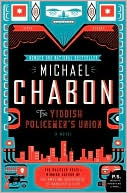
The Yiddish Policemen's Union, Michael Chabon


I wish I could say more about this book, but the truth is, I feel like I read it with only one eye and half of my brain. No fault of the book's, it's just been a long month, fraught with dying cats and sleep-allergic children. So much of my reading time has been done either at midnight in emergency pet clinics, or at the end of a long day that started out exhausted and therefore, I have only the vaguest memory of what I read the night before and it makes it hard to string the story together cohesively in my brain.

The premise, though? Fascinating. A Jewish state formed at the end of WWII in Alaska, of all places, is about to reach the end of it's "lease" so to speak and the Jews who have called Sitka home for decades are about to be, as Jews often are, cast once again to the four corners of the earth, on their own, with not official state.

The main character, Meyer Landsman, is a sad, neurotic shell of a man, grieving the death of his sister, and divorced after a personal tragedy tears he and his wife, Bina Gelbfish, (who ends up being his boss) apart. Along with his partner, Berko, who is half-Jewish, half-native Alaskan Indian, Landsman sets out to solve a murder of a man who seems to have been simply a junkie down on his luck, shot in the head in his hotel room (the same hotel, incidentally, in which Landsman resides).

With all odds against them, including the government for which they work, what Landsman, Berko and Gelbfish discover is that this mere junkie was actually a pivotal part in a plan born out of hope and desperation as the Jewish Sitka settlement approaches its reversion back to Alaskan control and almost certain eviction.

For imagination and the sheer beauty in his use of language, I am sorry my reading of Chabon's book doesn't do it justice. It is gorgeously written and parts of it are geniusly funny. The characters pay homage to a sort of 1940's detective noir style of development, but their circumstances are so surreal, they don't end up seeming trite or simplistic. The plot itself, of a Jewish settlement in the most unlikely of places, is a testament to the creative mind of Chabon, and the underlying sadness of the people, at home, but not at home, living under the false-illusion of control and stability for 60 years and now faced with almost certain eviction and the desperate reality of having no place to call home, while it's not lamented openly on each page, weaves it's way through each character and their stories.

Given how absent-mindedly I read this book and how much I enjoyed it, I imagine that had I read it with both eyes and all of my brain, it would have blown me away.

Friday, September 12, 2008


The Abstinence Teacher, Tom Perrotta

A fascinating cautionary tales of the dilemmas presented by extremism, Perrotta's book brings together the unlikeliest pairing of "heroes" in Tim Mason and Ruth Ramsey. Ramsey, a sexuality educator who insists on bucking the "abstinence-only" policy implemented by a predominantly Christian-right school board, finds herself head-to-head with her daughter's soccer coach, Tim Mason, a recovering-addict-turned-Christian, after Mason spontaneously breaks into prayer at the end of a game.

The story weaves through each character's history and the experiences that brought them to this particular battle, which, ironically, turns out not to be much of a battle at all.

As he did in Little Children, Perrotta creates characters who are so human, so understandably and thoroughly flawed that the line between 'good guy' and 'bad guy' blur. Being a fairly liberal-minded person myself, I fully expected to scoff at Mason's character and was ready to see him vilified as the judgmental, hypocritical image of Christianity that often gets portrayed in a story that pits the religious right against just about anyone else. I was prepared to embrace Ramsey as my heroine, my voice of reason and champion of my social and political views (what can I say? I am a bit fired up these days...).

But it was not nearly that simple. While my fundamental beliefs about the issues weren't changed by the book (and I don't think it was Perrotta's intention at all to do so), my idea about the people behind the issues were. I found myself, over and over again, sympathizing with Mason and also being a little annoyed with Ramsey. Even more surprisingly, I found the characters sympathizing with each other and ironically, even finding a sense of kinship between them as they each in their own way end up alienating those who are closest to them.

Just as Perrotta challenged us to look more closely behind the facade of suburbia in Little Children, he illustrates in The Abstinence Teacher that rarely is anything as black and white as our society tends to want to make it. It's not a comfortable realization; we like to believe we are right in our beliefs and sometimes it's easy to close ourselves off to the other side's point of view in an attempt to feel more secure in our own ideas. It's even easier to forget the human face of the other side; Perrotta's book serves to remind us that that human face is there, whether we like it or not.

Friday, September 5, 2008

See Jane...


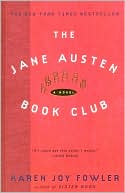
The Jane Austen Book Club, Karen Joy Fowler


This is one of those books I am liking more now that I'm done with it and can think about the characters' experiences with a little distance between us. I didn't fall in love with any of them, didn't really feel compelled by them as I was reading. On one occasion, I found myself checking to see how many more pages I had to get through and was happy to find a huge chunk of pages at the end that were additional materials and not stuff I *had* to read.

But now that I've finished reading it, I am finding that it did plant little seeds of "oh, I did like that" all over my brain and I have to say it is a good read.

The best thing about the book, though, and the thing I appreciated and liked from the get-go, is the way Fowler pays homage to Austen through the structure of her own novel. Each chapter takes a particular Austen book, and uses the theme of that book as the backdrop for the tale of the character hosting the reading group that month. Obviously, if you've read Austen at all, that makes the story lines created by Fowler fairly predictable in nature, but it's still an interesting read.

I have to admit I've yet to get on board with the whole Jane Austen revival that's gone on as of late; there are about eleventy billion books being published today that go back to contemplate Austen's stories from the point of view of another character, or creating new stories branching off where Austen left off. I hesitate to pick any of those up because I have a hard time believing they can even come close to duplicating Austen's style or perfection. They all look like they'd be hokey romantic drivel to me and Austen's novels go so far beyond that, I think it might be insulting to try to pick up where she left off. But I don't think Fowler's book does that at all. She brings some of Austen's themes (and truly she does focus on the romance of Austen's stories in her own recreations, but in a unsentimental way, I think) into a modern circle of people and simply shows the timelessness of Austen's thematic content.

Not going to go down as my favorite book ever, but I enjoyed it nonetheless.